
What’s actually changing
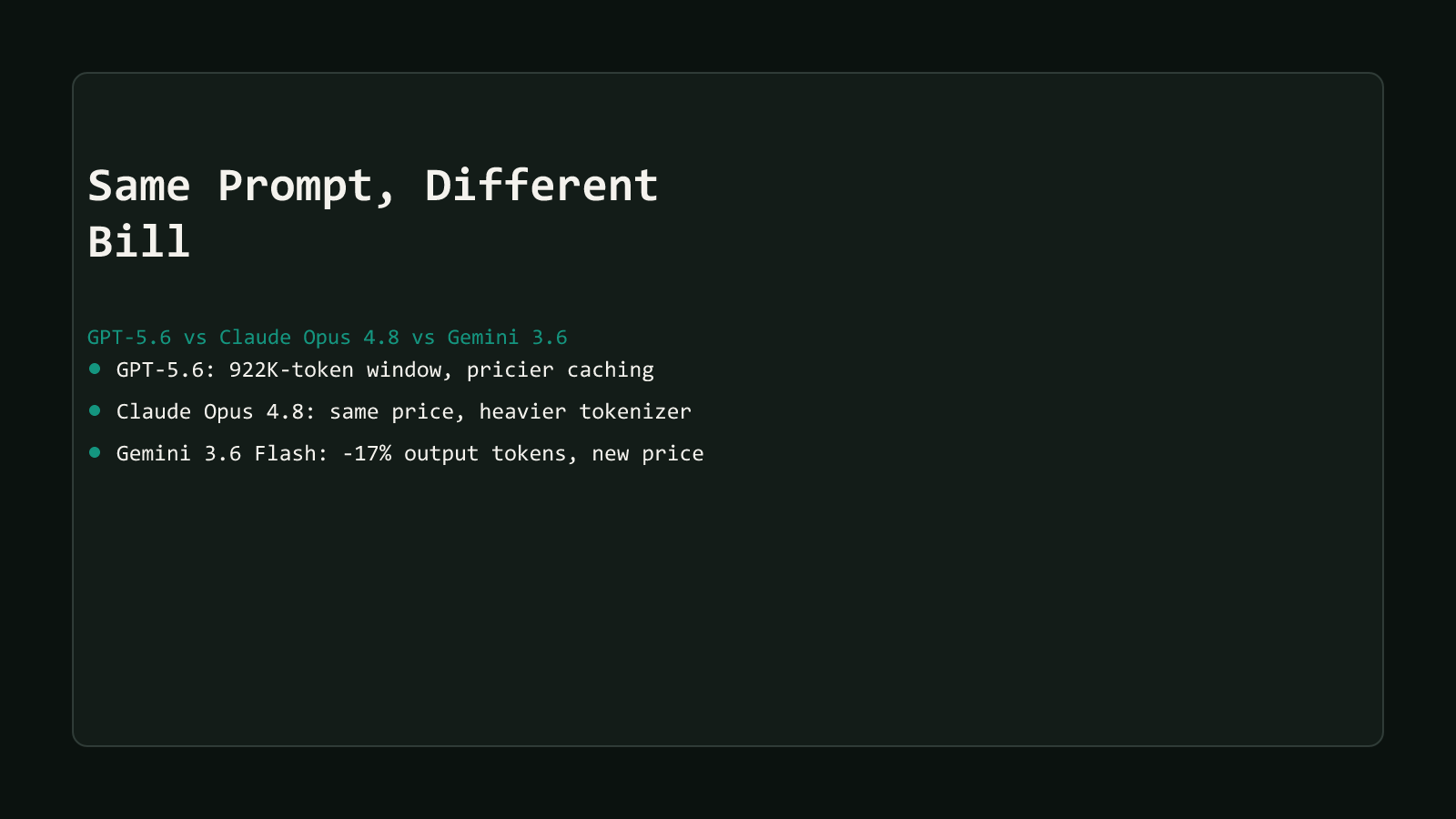
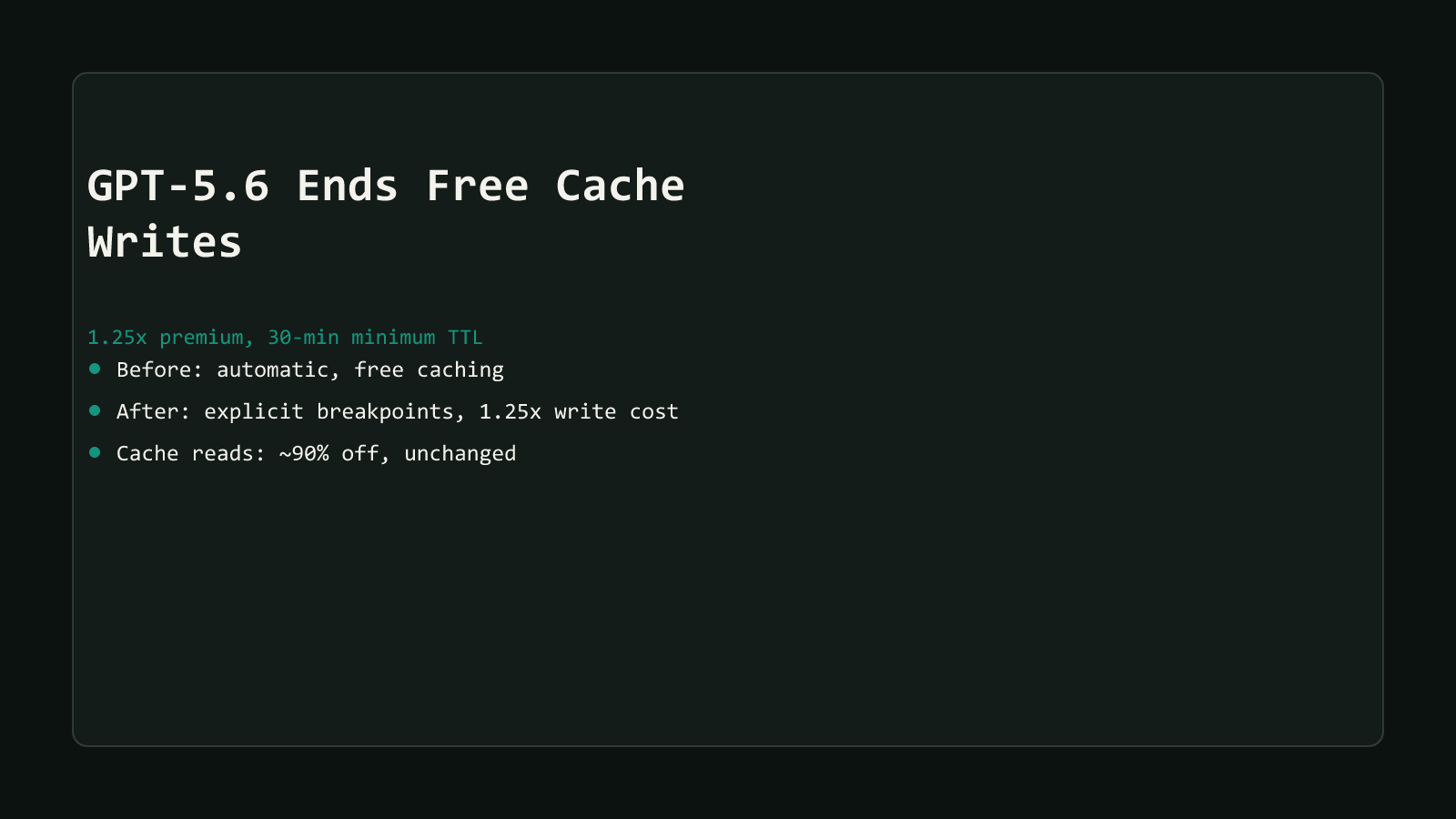
Third-party cost-analysis coverage reports that GPT-5.6 changed prompt caching from a free, invisible optimization into an explicit, configured one. Previously, OpenAI cached repeated prompt prefixes automatically at no extra cost. Under GPT-5.6, a request has to declare cache breakpoints explicitly, and writing to the cache for the first time now carries a 1.25x premium over the standard input-token rate. This detail is paraphrased from third-party cost analysis (effloow.com), tied to GPT-5.6’s 2026-07-09 general availability, not confirmed against OpenAI’s own primary pricing documentation directly.
The cache’s minimum lifetime also moved to 30 minutes. Cache reads keep roughly the same 90% discount off the standard input-token rate that caching offered before this change, so the discount itself did not shrink, only the path to earning it did, details now documented directly on OpenAI’s own prompt caching guide.
Structural Comparison Matrix
| Operational Aspect | Before (pre-GPT-5.6 caching) | After (GPT-5.6) |
|---|---|---|
| Cache activation | Automatic, implicit | Explicit cache breakpoints required |
| Cache write cost | Free | 1.25x premium per write |
| Minimum cache lifetime | Short, a few minutes typical | 30-minute minimum |
| Cache read discount | ~90% off standard rate | ~90% off standard rate (unchanged) |
Fix it: add explicit cache breakpoints
Any integration that never configured caching, because it previously happened for free without any setup, is not getting a silent downgrade under GPT-5.6. It is getting no caching at all until breakpoints are added explicitly. That is a real code change, not a pricing footnote: identify the shared prefixes in your prompts (a system instruction, a long reference document, a set of few-shot examples) and mark them as cache breakpoints so repeated calls actually hit the discount.
Budget for the write side too. The first call that populates a cache breakpoint now costs 1.25x the standard input rate for that portion of the prompt, a real cost that did not exist before. For a workload that reuses a cached prefix many times before it expires, that write cost is easily recovered by the read discount. For a prefix cached once and rarely reused, the write premium may cost more than it saves, especially with a 30-minute minimum lifetime to work around.
The LLM Pricing Calculator has a write-vs-read toggle for exactly this scenario, so you can compare the write-premium cost against the accumulated read savings for your own reuse pattern instead of doing the arithmetic by hand.
Retention moved too
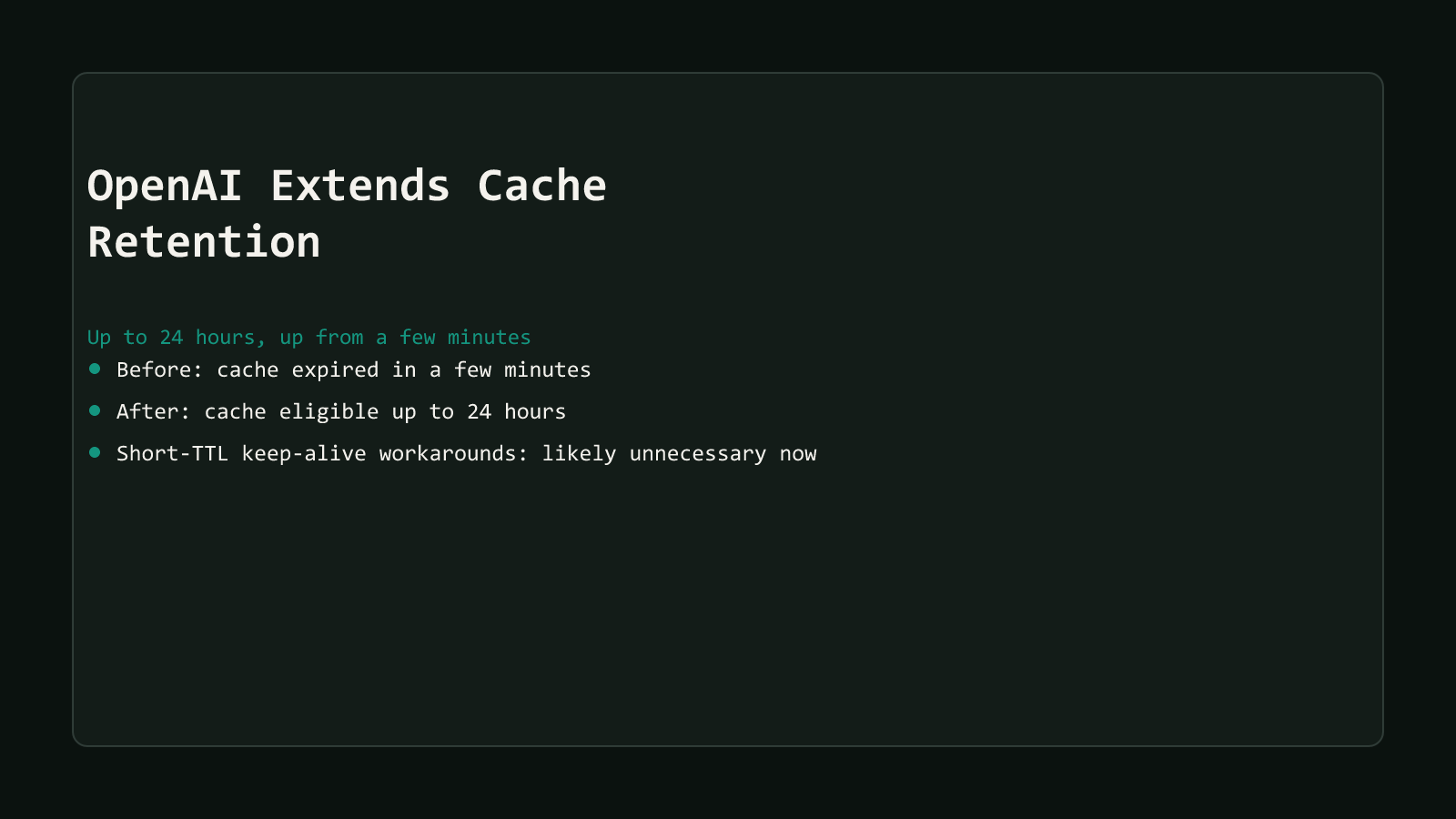
OpenAI separately extended cache retention further, up to 24 hours by default in some configurations. See OpenAI Extends Prompt Cache Retention to 24 Hours for how that changes the reuse-window math above.
Confirmed version
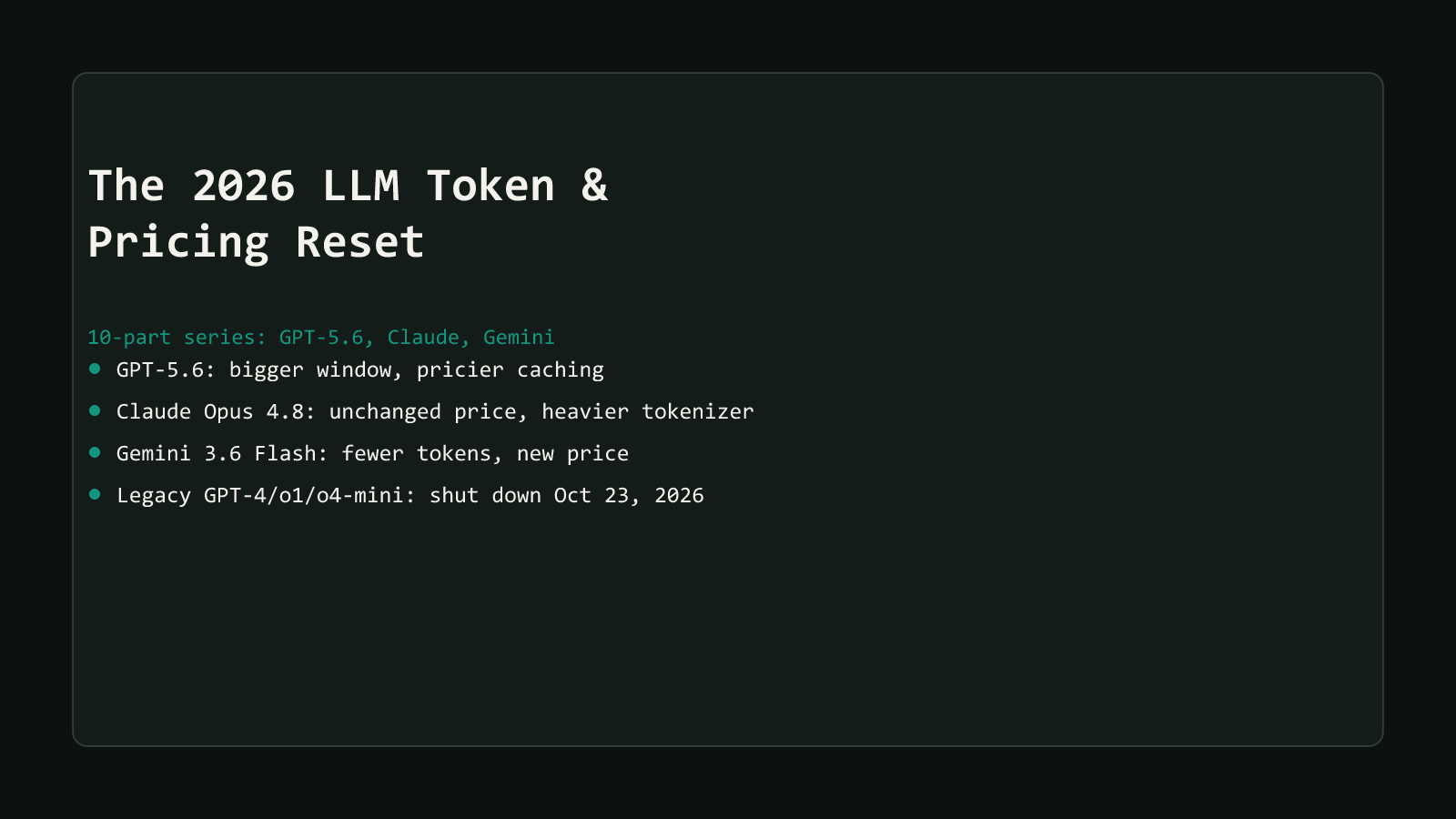
Sourced from third-party cost-analysis coverage (effloow.com) tied to GPT-5.6’s general availability, 2026-07-09, not OpenAI’s own primary pricing documentation directly. Browse more coverage in the AI Productivity archive, or start from The 2026 LLM Token & Pricing Reset hub.