
What’s actually changing
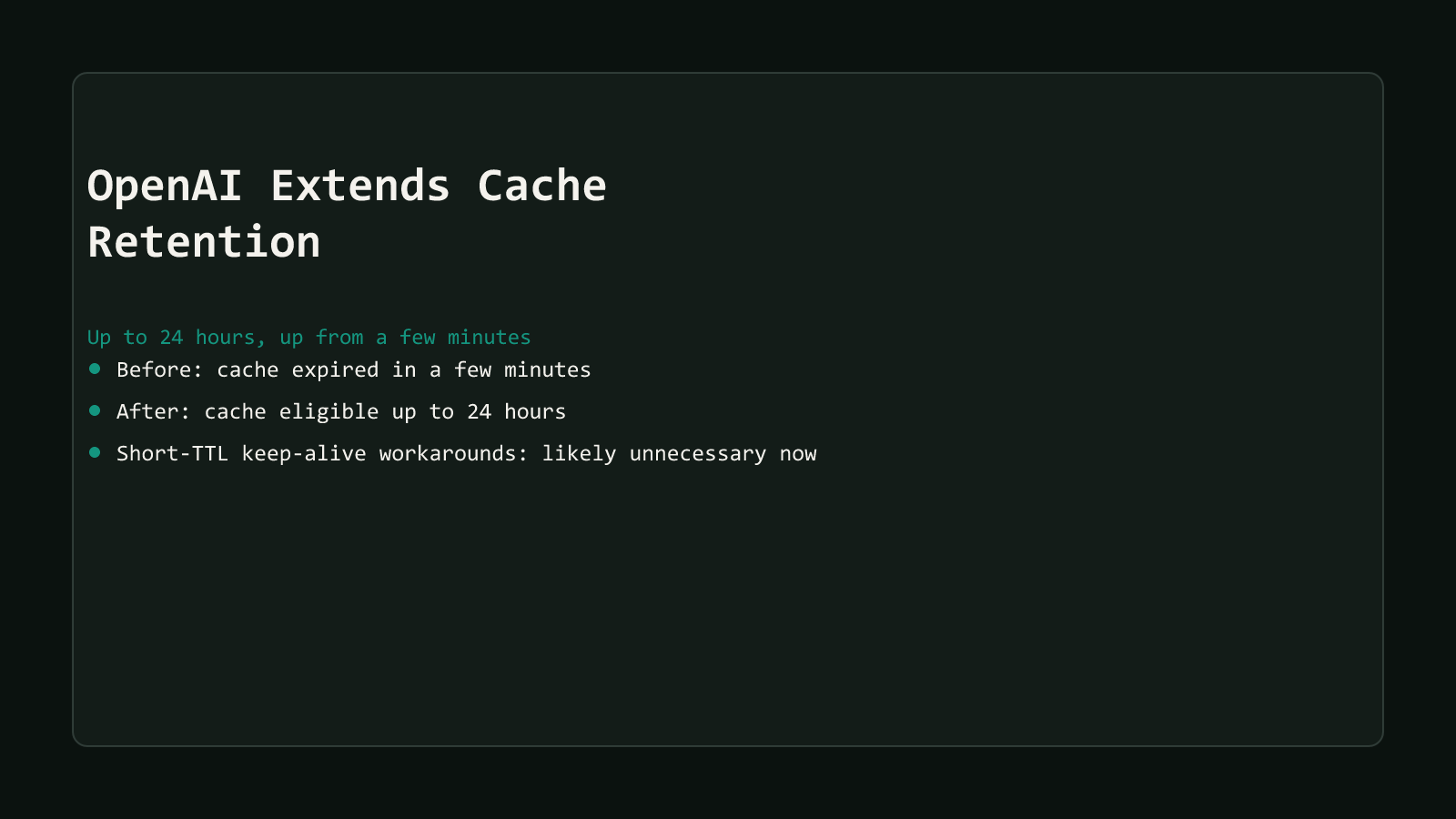
Third-party cost-analysis coverage (effloow.com), dated 2026-05-29, reports that OpenAI moved the default prompt-cache lifetime from a few minutes to up to 24 hours. That is a meaningfully longer window for anything that reuses the same prompt prefix across separate calls that are not tightly clustered in time.
This is paraphrased from measured third-party analysis, not confirmed against OpenAI’s own primary documentation directly, and is stated honestly as such. The mechanism it changes is retention duration specifically, distinct from the cache-write premium and breakpoint requirements covered separately, and OpenAI’s own prompt caching guide documents an up-to-24-hour extended retention window using the same figure for eligible models.
Structural Comparison Matrix
| Operational Aspect | Before | After |
|---|---|---|
| Default cache lifetime | A few minutes | Up to 24 hours |
| Repeated-call workflows | Needed calls within minutes to hit cache | Can span hours and still hit cache |
| Workarounds for short TTL | Common (keep-alive pings, tight batching) | Likely unnecessary now |
Fix it: stop working around a window that no longer exists
If your pipeline previously batched calls tightly, or sent a periodic no-op request, specifically to keep a cache entry alive before it expired, that workaround is likely solving a problem that no longer exists at this scale. A 24-hour window covers most batch jobs, scheduled agent runs, and even a full business day of interactive use without needing an artificial keep-alive.
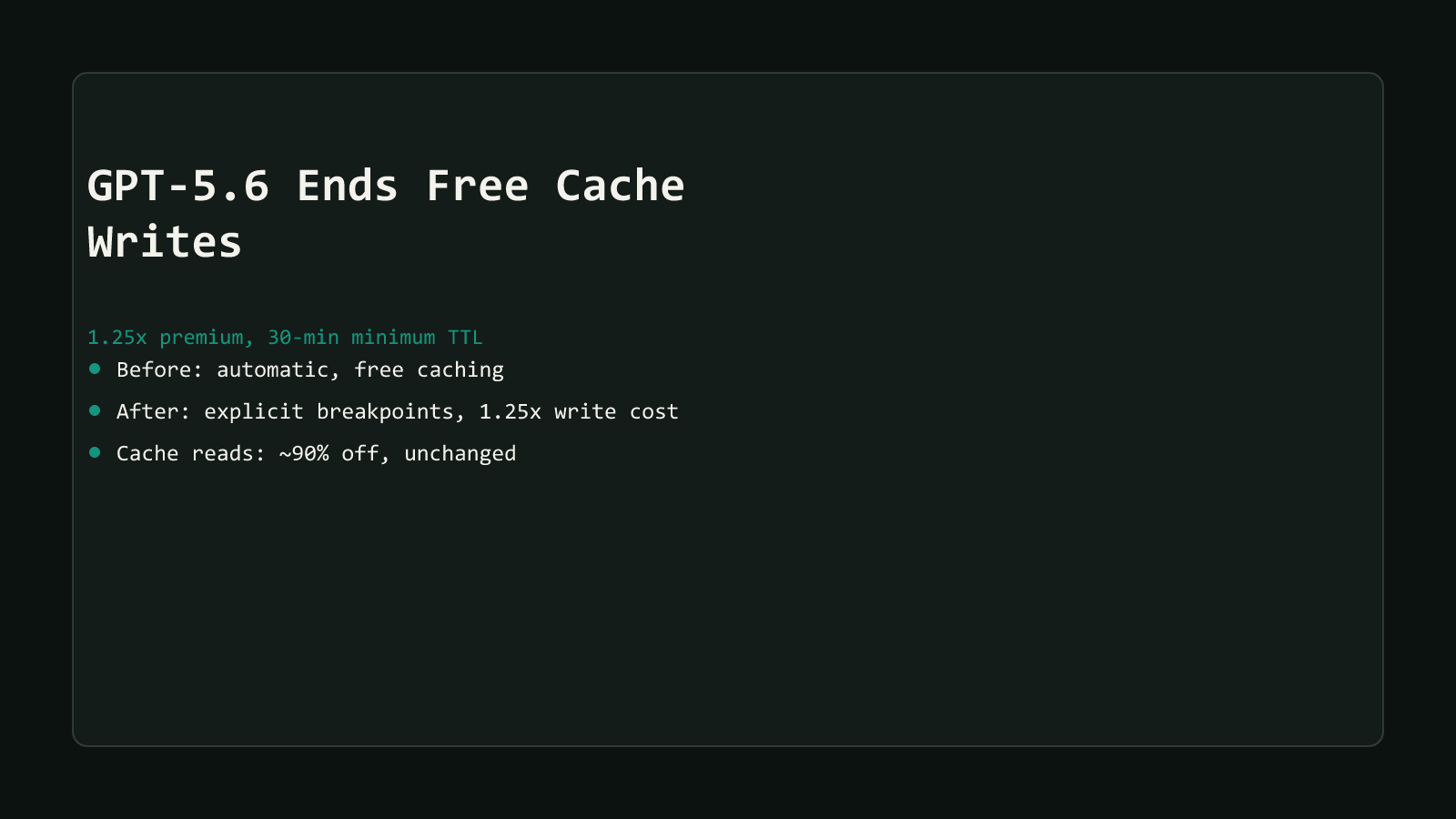
The more useful change is upstream: this is a good time to restructure prompts so the reusable part, a system instruction, a long reference document, a tool schema, sits at a stable prefix marked as a cache breakpoint (see GPT-5.6 Ends Free Prompt-Cache Writes for how breakpoints work). A longer retention window makes that investment pay off across a wider span of real usage than it did before.
Model the reuse window, not just the write cost
A longer retention window only pays off if your workload actually reuses the cache inside it. The LLM Pricing Calculator lets you compare the cache-write cost against accumulated read savings for your own call pattern, rather than assuming a 24-hour window automatically makes caching worthwhile.
Confirmed version
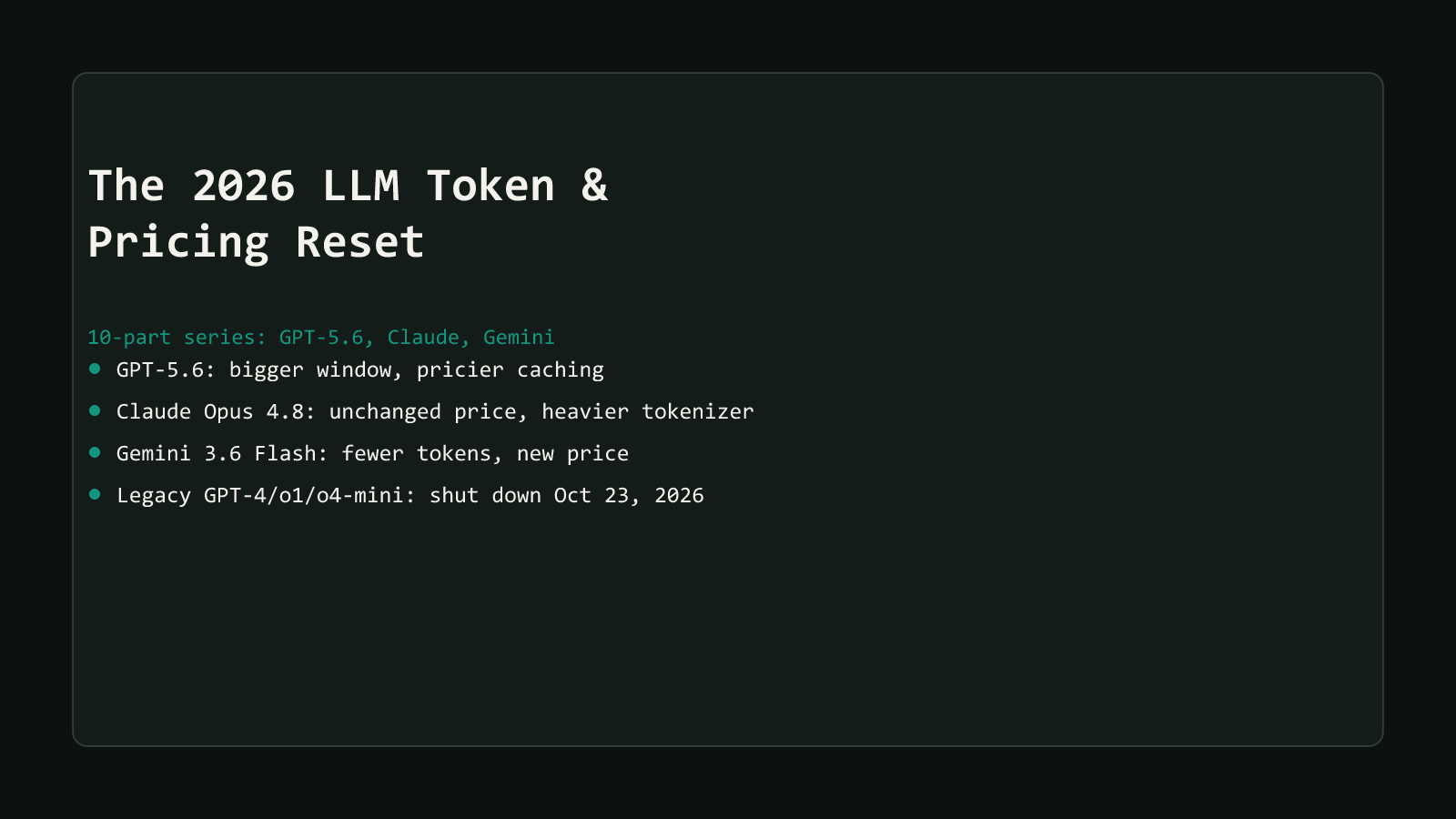
Sourced from effloow.com’s cost-analysis coverage, dated 2026-05-29, not OpenAI’s own primary documentation directly. Browse more coverage in the AI Productivity archive, or start from The 2026 LLM Token & Pricing Reset hub.